Oleksandra Matviichuk: ‘Winning the war but becoming Russia makes no sense’. Why Ukraine won’t join the EU without LGBTQ+ rights
25.04.2026


Why the state is stalling on the human rights track, what the value dimension of the war is, and what the key to change looks like — let’s read the reflections of one of the most influential women in the world (according to …), Ukrainian human rights defender Oleksandra Matviichuk.
Why the state is stalling on the human rights track, what the value dimension of the war is, and what the key to change looks like — let’s read the reflections of one of the most influential women in the world (according to …), Ukrainian human rights defender Oleksandra Matviichuk.
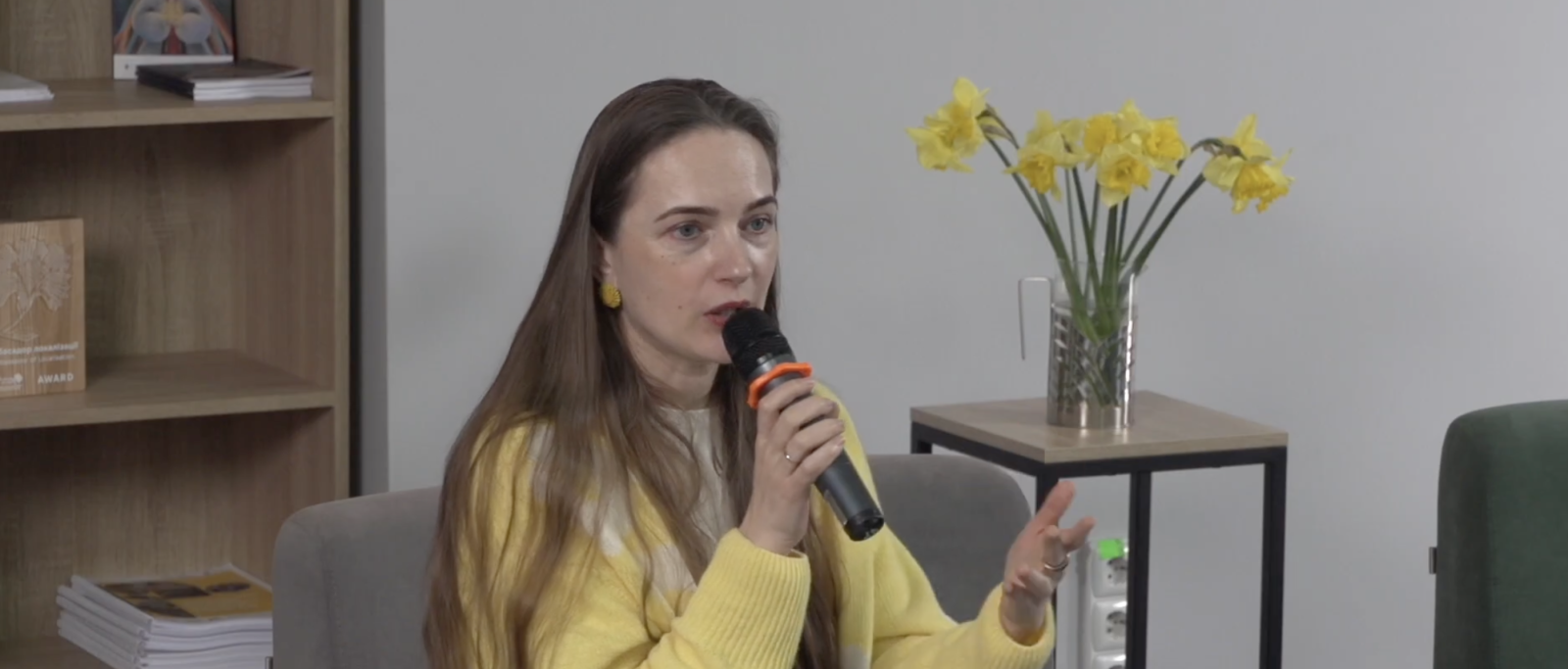
“I haven’t seen any progress over the past 1.5 years [on the human rights track], none at all. Nothing is being done,” says Ms. Matviichuk, Head of the Board of the Center for Civil Liberties and laureate of the 2022 Nobel Peace Prize.
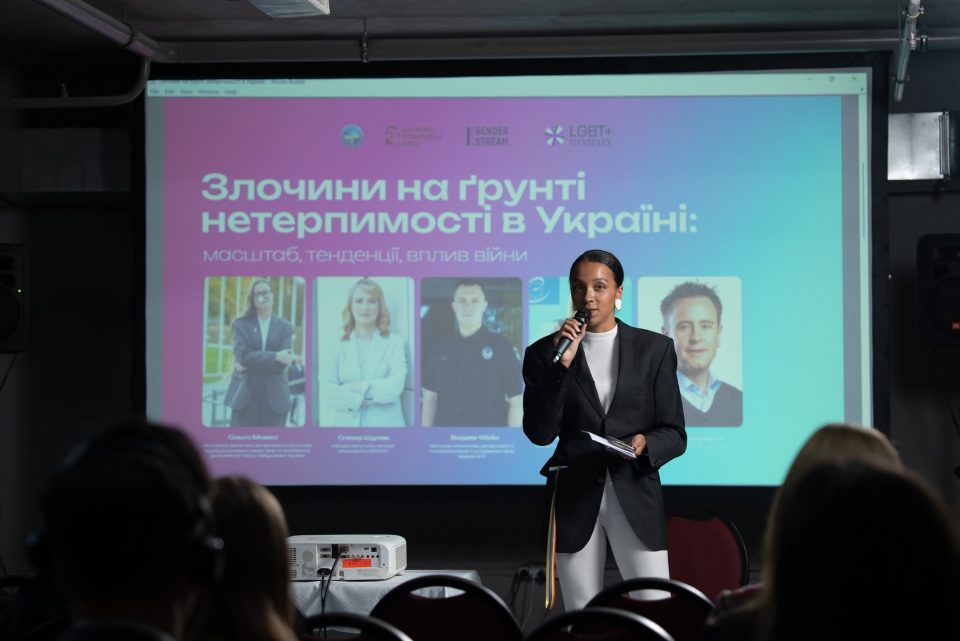
The human rights defender expressed this position during a guest lecture on April 22, 2026, held at the space of the Alliance of Ukrainian Civil Society Organizations. The event took place with the participation of representatives of the civil sector.
Oleksandra Matviichuk noted that the problem lies not only in the difficult conditions of war but also in the strategic approach of the authorities. In her view, there is a mistaken belief that Ukraine can be admitted to the EU without fully implementing reforms.
In other words, the logic of the authorities follows the same path through which Ukraine has been receiving support from Western countries since 2022: first being told “no, you will never get this,” and then, a year or a year and a half later, receiving support — albeit with delays. This way of thinking — that one just needs to keep pushing and waiting, and then Ukraine can join the EU without completing its “homework,” including in the human rights sector — is considered by the human rights defender to be a major mistake:
“This way of thinking has now been transferred to EU integration: we are not just defending ourselves — we are the shield of all of Europe, so take us [into the EU] without all the reforms. It’s not that the authorities do not want EU integration. I am convinced that specific people in power see themselves in history not just as those who fought Russian aggression, but as those who managed to fulfill a historic mission — to break away from the ‘Russian world’ and become part of the European space. But they think they can push this through [EU accession without reforms — ed.]. I’m afraid this is a major mistake.”
Matviichuk stressed that such a strategy will not work and needs to be reconsidered — Ukraine needs to change and implement these reforms.
The human rights defender also paid particular attention to the conflict between the logic of war and the logic of European integration. She explained that war objectively leads to centralization and restrictions of rights and freedoms, while the European course implies their expansion.
“The logic of war speaks of centralization… while the logic of European integration speaks of decentralization,” she noted.
According to her, Ukraine is forced to balance between these two approaches simultaneously, without postponing either of them. In this context, Matviichuk emphasized the importance of communication with society and countering narratives that question the value of rights and freedoms during wartime.
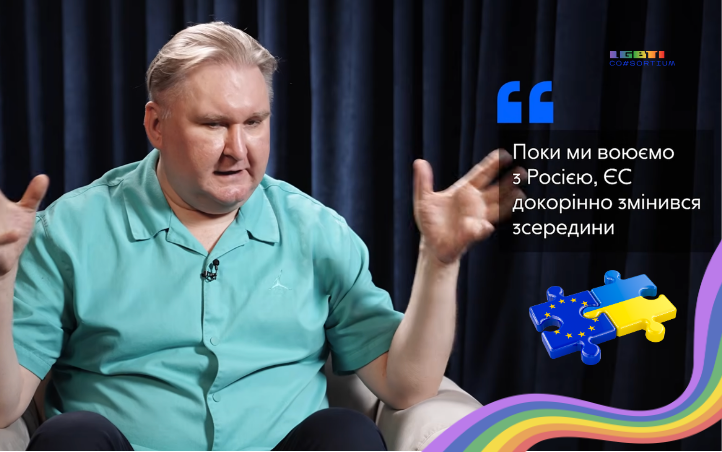
As part of the discussion, Andrii Chernyshev, Head of External Relations and Advocacy Department at NGO “Alliance.Global” and Co-Chair of the National LGBTQI+ Consortium, raised the question of the role of civil society in ensuring that the state fulfills its EU integration obligations, particularly in the field of human rights.
He pointed out the mutual distrust that sometimes arises between the state and civil society, noting that both sides often perceive each other as a problem.
“You say, Oleksandra, that civil society thinks: ‘how good we are and how bad the authorities are.’ But in government they think exactly the same — only the other way around: ‘we, the authorities, are working, and they come and demand things, complain,’” he noted.
In his opinion, this situation can be changed, in particular, by involving representatives of civil society in public administration:
“Going into government as representatives, as leaders of civil society, is the best option.”
Chernyshev also emphasized the issue of Ukraine fulfilling its obligations to the European Union. According to him, the state demonstrates a low level of implementation of assigned tasks and in some cases effectively delays the process.
He stressed that this is particularly visible in the field of human rights, especially regarding the lack of progress in implementing civil partnerships and protecting the rights of LGBTQI+ communities.
“The state deliberately delays the implementation of these tasks and, one could say, sabotages some very strategic issues. This is related to sectors such as anti-corruption, and it is especially visible in the area of human rights. Among other things, the state is sabotaging issues such as the protection of LGBTQI+ rights, including civil partnerships,” he said, asking the speaker about the possible role of civil society and NGOs in driving change in Ukraine, particularly in the EU integration process.
In response, Oleksandra Matviichuk outlined the need to transfer the international agenda to the national level. She emphasized that internal changes are decisive for successful integration:
“The short answer is: we need to engage in national advocacy. Everything that happens on the international stage must be brought to the national level.”
[* Advocacy — influencing authorities from outside government for social reforms, — editor’s note.]
In addition, society needs to understand that the current agenda includes both survival and transformation simultaneously, Matviichuk stressed:
“To survive, we need to change. Because I see a very strong alternative narrative: that we don’t need democracy, that during war we need a strong hand. That rights and freedoms are not necessary. That first we need to survive. I think this is a mistaken way of thinking, because the path shapes us. If you choose the wrong path, the goal itself may change, because people who walk the wrong path change significantly.”
Matviichuk emphasized that these processes are an integral part of Ukraine’s broader struggle for freedom, as the war has not only a security dimension but also a value-based one.
“Winning the war against Russia and becoming Russia ourselves makes no sense,” she concluded.
The full recording of Oleksandra Matviichuk’s lecture and her open discussion with human rights defenders can be viewed at the link:
News